Sunday, November 27, 2011

The Legend of Zelda: Skyward Sword


Yup.

Thrust upon us once again is another Zelda game, released at naturally the worst time of the year for people whom wish to do things like accomplish work, see loved ones or even play other video games. How long has it been since a non-Bioware, non-Bethesda game was released that was over 30 hours long? I mean a game where all 30 of those hours was dedicated to the main story. I feel like Nintendo dedicated Skyward Sword to my 12-year old self, the person who was only getting one game all year and was going to play that one game after school every day for the next three grades. (The life of a Nintendo 64 owner was a simple one.) There is enough content in this game to last many missed English assignments. How many games can get away with claiming that without riddling themselves with sidequests about rescuing and escorting hookers? (Oh Saint’s Row the Third, I masochistically love you.)

So I chose to put off Skyrim until I finished Skyward Sword, which is the equivalent of putting off a CN Tower stair climb to do the Terry Fox Run. This is a lengthy game. Link will traverse dungeons. He will explore far away lands. He will pick up small keys. He will engage in a fetch quest. I may have had small complaints about the sailing fetch quest in Wind Waker, and I have thrown many violent, hysterical fits over the many annoying fetch quests in Twilight Princess. Skyward Sword is the kind of game that isn’t afraid to make you revisit some old areas in the name of buying the game some time before it’s finished and left to die on the used shelf at Gamestop. But except for one repeated-too-often boss fight and one brief but extremely annoying fetch quest (which is more annoying because it involves swimming, the bane of most every game), Zelda at least earns the right to be redundant by spicing up its treaded ground. An area that you forced to revisit may suddenly have vicious archer goblins that require some tactical elven sniper skills from your bow to proceed.

The next obstacle you’ll have to cope with is your own sense of pacing. Years of playing non-Zelda-styled games may have gotten you adept at a certain pacing structure. You know, the “doing things will progress the game” style of pacing that kind of defines, well, storytelling. Here’s an example of how a normal video game would progress.

You need to be at Burger King because you want an Angry Whopper. You run across your street. You may have to fight off some hoodlums in a test of your combat abilities, but your path to the Angry Whopper is clear. When you reach the Burger King, there is a cutscene of you buying the Angry Whopper.

Now, in Skyward Sword, the scenario plays out differently.

You need to be at Burger King because you want an Angry Whopper. You run across your street. You may have to fight some hoodlums and run over some quicksand because running is the best way to avoid quicksand. When you get there, you learn that the store manager locked himself out and you need to travel to three different dark, hoodlum-filled alleyways to collect the three parts of the key. Once you’ve gone out of your way to collect the key, you enter the Burger King, where the manager asks you to travel across three different, perilous dungeons to obtain the bun, ground beef and fried onion rings needed to create the burger that vanquishes evil.

What I’m trying to get at is that Skyward Sword has no qualms about leading you on, for as long as it thinks it can get away with it. This isn’t to be mistaken with the game having drawn-out fetch quests, but rather that you will not make as much progress in a single play session as you think you will. I learned quickly not to set time goals; you can’t say to yourself “I’m going to reach and finish the water temple by the time the turkey’s done” without risking a burnt bird and a very ungrateful Thanksgiving. Play the game at your available time, and don’t set goals.

But I found that I rarely minded that. Past Zelda games felt like they were checking marks off a checklist on a tourist guide. You knew Link was going to visit Death Mountain, hang with his Goron homedawgs and throw a few bombs in a Dodongo’s mouth. Been there, done that, played that nostalgia card so much the edges are worn down. So I was pleasantly surprised to see Skyward Sword grant players some new sights and smells. There are new tribes of wildlife that need aiding, new items to create new gameplay mechanics, creative new dungeon ideas and puzzles, and some of the best boss design since, oh, I don’t know, the pro wrestling match in Saint’s Row the Third. Even Ganon has been replaced by a new and appropriately creepy surrogate force of darkness that wants to destroy the world because that’s what forces of darkness do.

Though Zelda fans will still find plenty of ties to their beloved series. Of course there’s a Link and a Zelda here. Of course there’s a recurring character here and there. You know, story-vital characters like Beedle the shopkeep with no self-esteem. Of course you’ll keep fairies in bottles the way PETA hates you for. Actually, Zelda fans will appreciate this game the most on account of how there are a handle of reveals explaining the nature of things. There is still enough of a standalone story as for new players to not be left in the dark, but one can assume Skyward Sword precedes the entire story, offering little bits of insight into the land and lore.

Speaking of, the land here consists of a civilized floating land mass called “Skyloft”, and an unexplored plane of wild land called “the rest of the fucking world.” The sky is the main hub, and Link’s equivalent to a horse or talking sailboat is a giant-assed red bird that responds to motion-controlled orders. The game does well to tap into the Wind Waker mentality of giving a wide-open expanse to encourage the player to explore, while trumpeting a powerful orchestral soundtrack. You’ll find sidequests on the other lands and treasure chests that you unlock via smashing blocks on the ground, and feel kind of awesome for nose-diving across the sky on your sweet ride of a PETA-Flash game waiting to happen. Also, the game taps into Wind Waker’s light visual style by presenting the world in colourful, painterly colours as to give the world some personality. It doesn’t go all the way silly like Wind Waker, and doesn’t get as straight-laced and boring as Twilight Princess. Skyward Sword finds the best of both worlds.

I guess I should talk about the motion controls at some point, being that they kind of are the centre of this game’s marketing. You will need a Motionplus adaptor or Wiimote Plus to play this game. I feel less like an idiot now for buying the Motionplus to play Tiger Woods Golf on the Wii. (Hey, if you haven’t played Tiger Woods on the Wii, you are missing out on the system’s best implementation of motion controls. I’m not even joking.) Now, the second best implementation of motion controls is Skyward Sword. You will need to move your remote around to fly your bird, aim your arrows, whip bombs around, turn strange-keys that locksmiths must’ve spent centuries designing, and so forth.

I was partially at odds with the game, largely because I’m a sloth trying to play a motion-controlled game lying down. There were moments where I had to position my arm off my bed so I could tilt the remote down. There were times where I froze on a tightrope because the mechanism for balancing requires you to hold the remote horizontally and my arm was too busy holding up the weight of my upper body. First world problems, I know. You learn to be deliberate with your actions, as the game is smart enough to discern the difference between throwing a bomb and holding a bomb in the air as to say “HEY LOOK I HAVE THIS BOMB IT GOES BOOM BOOM POW CHECK OUT MY HYRULE SWAGGER.”

And then there’s the swordplay. You swing your remote in different directions and Link will respond accordingly. Like with other control mechanisms, you have to be deliberate and precise with your motions, or else Link will think you’re doing cartwheels and respond with a goofy backflip sword attack. A goofy backflip sword attack that the final boss outright mocked me for doing over and over out of my adrenaline-soaked intensity. Enemies are designed to respond to different sword attacks; the guy who just happens to be holding his sword up in the air leaves his belly open for a horizontal c-section from the Skyward Sword. A very early boss is designed to lick his lips at the thought of players who “waggle” the controller and can only be thwarted via skillful wristmanship.

Like every combat action game, the challenge becomes in learning enemy behaviors and responding with the according sword swipes. This is not to be mistaken with, say, every Kinect game, which gives players insane amount of leeway to commit to a complex motion. Enemy plants will only leave their maws open for short periods of time before mocking your slow wrist and taking a chunk off Link’s face. So I feel comfortable in saying Skyward Sword is the first plausible case of a motion-controlled game designed for the “core” group of gamers who think motion controls have dumbed down the industry in a swarm of mini-games and Rabbids.

Actually, I feel comfortable recommending Skyward Sword to anyone short of the most abject Zelda franchise haters. You could think about playing it because the motion controls are the closest we’ve gotten to realizing that dream of “holding a lightsaber for a Wiimote.” You could think about playing it because the world it creates is an exciting place to go adventuring in. You could play it because it has no shortage of content. You could play it because you like collecting bugs and there’s an entire mechanic dedicated to catching bugs with your 1-to1 controlled bug net. I can at least confirm that it is the first, second or third-best “Sky” related game to ever come out. (Can’t speak to Skyrim’s quality, but I can say Crimson Skies on the Xbox was pretty sweet.) You should probably play this.

4 stars

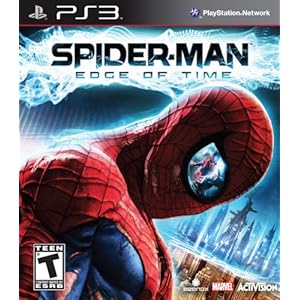
Spider-Man: Edge of Time


It sure is great that all 6 billion human beings on this planet have individual tastes and opinions and aren’t just some manufactured collective Borg consciousness. Sure, the differences in beliefs can lead to war or death or genocide, but I’ll take that over sitting in a weird electrical-recharge-station thing inside a giant flying space cube any day. How awesome is it that we can choose our favorite songs, movies, poems, floral patterns, interior decorations, room motifs and other manly things?

That freedom of opinion only rarely backfires on us. Such as how the one or two only people in the world that actually liked Spider-Man 2099 were the people that convinced Activision to make a game based on Spider-Man 2099. And thus we have Spider-Man: Edge of Time, the superhero game no one was itching to see exist. That it does exist as a follow-up to last year’s Spider-Man: Shattered Dimensions is even more baffling. That latter game consisted of four different Spider-Men, including the aforementioned 2099, but the gameplay for three of those Spider-Men were of the “not worthy enough to bleach Dante’s hair” variety. Rather, the consensus strongest aspect of that game was the Noir-Spider-Man levels, and their focus on using the web-slinger’s powers with a stealth focus beyond fists to faces.

Crawling on walls, hiding from big, bad humans, and then webbing them up and making them fear you. You know, what an actual spider would do if it were 5’9 and could lift cars. It was like they were trying to recreate the thrill of the recent Batman games and being the scariest entity in a room filled with muscular men with automatic weapons. Oh, and it was aping film noir, so Spider-Man preached gloomy narrative about rainy nights, cannibal-Vulture and probably doing a Max Payne face under the mask. Even with its obvious inspirations, it was a fresh idea for both a video game and the Spider-Man universe.

All the suspense and intrigue that came from the Noir segments are long gone, and we’re left with all of the other parts of Shattered Dimensions that no one wanted. Edge of Time is a linear, corridor-oriented beat-em-up. Woo Hoo. You go from room to room in a linear path, you punch armoured thugs with guns. Sometimes you need to punch specifically-marked thugs to get keys. Sometimes you stand in front of a door and have to trick a missile into opening the path for you. Sometimes you have to quick-time-event-mash-a-button to open a door.

That is all. That is the entire game. There’s your friendly neighbourhood Spider-Man in action.

I feel like I have to stick my arm as deep into the virtual disc world in my PS3 as possible in order to wring out aspects of the game to talk about. I think there were three boss fights with things that loosely resemble famous Spider-man villains that are decidedly drawn out affairs. There are bits where you are free-falling and have to avoid various architecture placed in a manner that makes no sense in any building but a building designed for free-falling in a video game. There is web-swinging and wall-crawling, but they are such tertiary parts of the game that the Spider-Man name on the packaging means nothing beyond some kind of contractual obligation Activision has with Marvel.

The game tries to find some semblance of identity by intermingling present day Spider-Man with 2099 Spider-Man. You’ll alternate between the two as the story sees fit. The only major difference between the two is that one has a hologram attack that throws off 2099’s best homing technology. Also, present day Spider-Man has some occasionally goofy liners; 2099 Spider-Man says “shocking” in place of expletives. Over, and over and over again. Again, someone liked Spider-Man 2099 to think he warranted a video game.

The game attempts to convince you that time travel is a big deal. Things that happen in the past will have a direct impact on the future. I think Ashton Kutcher made an awful movie about that once. For example, if present day Spider-Man destroys a giant robot in 2011, no one will think to repair that robot 88 years later for Spider-Man 2099 to fight. That was the day Carlos the janitor got fired and he’s the only one that enters the maintanence bay to dust off the giant death-bots, I guess. Instead, 2099 Spidey fights a bunch of smaller robots in giant robot’s place. Why? I don’t know. They throw a bunch of big sciencey words like “quantum causality” that don’t make any kind of sense, and none of it amounts to anything more significant than a pre-scripted event you have no control over. Everything about the game feels lazy, like the rest of the development team at Beenox thought this Spider-Man 2099 business was a bunch of shocking bullshock and they’d rather be dealing with badass motherfucker Noir Spider-Man.

The nicest thing I can say about Edge of Time is that you are actually playing as Spider-Man, something that the people who made X-Men: Destiny didn’t quite comprehend so well. But in a world where the Batman Arkham games are reality, homogenous beat-em-ups with a license tacked on are intolerable. Even worse is that good Spider-Man games have been done before; games that understand how Spider-Man is in his element swinging around a giant city like some kind of smarmy Tarzan. So an indoor-corridor-based beat-em-up for a Spider-Man game feels doubly insulting.

2 stars

Thursday, November 17, 2011

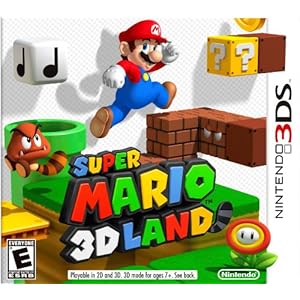
Super Mario 3D Land


Oh, PETA. I ironically love you guys so much. Not because I agree wholeheartedly with your beliefs. I can only do so much to defend animal rights with a Slim Jim in one hand and a fly-swatter in the other. But your oft-irrathttp://www.blogger.com/img/blank.gifional attacks against unknowing targets serve more to assist your victims than harm. The “Tofu Boy” debacle from last year wound up giving the independently produced Super Meat Boy some much-wanted extra sales and an ingenious parody for Steam players. Now you’re accusing innocent little Mario of skinning tanookis and wearing their fur for fashion and superpowers. While Mario has spent some less-than-kosher time jumping on turtles and chasing a tie-spouting gorilla with a hammer, wearing a cute animal costume feels less like animal cruelty than belated Trick-or-Treat material. But alas, they made the Flash game “Mario Kills Tanooki”, which both makes Mario come across as a merciless badass and serves as free publicity for the pretty darn great Super Mario 3D Land.

So the Tanooki suit has come out of retirement in this game, and has weirdly become a driving force of the experience. In this game, Bowser has kidnapped the Princess because his DNA commands him too, but he also stole a lot of Raccoon leaves from Super Mario Bros 3 to help him. So, brace yourself for this…Bowser’s minions have raccoons tails! Goombas have tails. Bullet Bills have tails. Bowser has a tail. How can Mario deflect these weapons of mass destruction?

With leaves and tanooki suits of his own, of course! As well as picking flowers off the ground for fire attacks. You don’t see Poison Ivy getting her panties in a bunch over Mario’s treatment of shrubbery, do you PETA? (Sorry, still on the Arkham City kick.) I appreciate Mario 3D Land’s returning emphasis on power-ups that exist until someone hits you with a boomerang. All this in spite of how desecrating it is that a leaf gives you full blown tanooki outfit and not just the raccoon tail, or how you don’t get a tanooki suit that can transform into a statue until you finish the game, or how this tanooki suit has no flight capabilities, but that’s just me wanting to re-play Mario 3 again.

Mario 3D Land’s gameplay seems to be positioned somewhere between several different Mario games. Your controlled Mario moves around a three-dimensional area with about the same grace as Mario 64 Mario, and the stages have elements taken from the Galaxy games, but the progression of each stage is as linear and pro-jumping as old Mario sidescrollers, and now I’m sounding like I’m too into this shit. The camera angle is generally fixed in an isometric position designed largely to make three dimensions pop in as pompous a way as possible.

And pop they do. The 3D is often very clear and defined, and not exclusively used to make things exploitatively fly in your face. (Though expect an incoming Bullet Bill or two, because why not?) The 3D effects are actually given the tactical use of providing depth to the environment, and subconsciously helping you gauge jump distance in your platforming exploits. The game will even occasionally toss in a puzzle that demands you flex those eye-muscles to judge where certain parts exist in the environment. These are rare but novel, and a quick camera-angle change is all it takes to help players whom can’t use/despise all of this three-dimensional malarkey.

This is also a game of surprising length and content. There are 8 worlds, several stages in between them and a heaping dose of Mario series nostalgia spread throughout. The classic Mario series callbacks are all over the place, both in the level design and in the music. Also, finishing the game yields an entire second sect of levels that remixes all of the earlier stages in more difficult manners. The caveat is that your progression in the game as a whole depends on collecting the hidden “star coins” in each level. I rarely ever ran into a situation where I didn’t have enough star coins to advance to the next stage, but it’s still a buzz-kill when you do get stunted. I couldn’t give you an actual hour count as to the game’s length, but it did take me several full 3DS battery charges, which is more of an indictment of the damn system’s battery.

If this review feels decidedly less winded than my usual lengthy rants, it’s because this game doesn’t stray that far from the Mario MasterMold. Don’t expect any surprises or groundbreaking innovations. You don’t even get to see Mario skin a tanooki and wear its skin Cruella De Vil-style. But you get a reliable, entertaining Mario handheld game, one whose levels are succinct enough to suit quick playthroughs on a portable device. Also, the game ranks up there with A Harold and Kumar Christmas and Jackass 3D as the most respectable, dignified use of 3D to date. Finally, it makes me yearn for the sequel, where Bowser kidnaps the Princess and powers all of his troops with frog suits.

4 ½ stars

Monday, November 14, 2011

Catherine


So I had recently been approached with the opportunity to write video game reviews for a website targeting teenage girls. Two thoughts popped into my head; one is that I can continue to procrastinate on editing that Spiderman Edge of Crap review I typed up weeks ago. Secondly, this would be a good chance to go reflect on my experience with this summer’s romance conspiracy puzzler, Catherine. After all, if there’s one thing teenage girls despise, its unfaithful men. Likewise, they may also like block puzzles, sake and baritone narrators. So should your very specific and unlikely combination of tastes match up, Catherine may also be for you.

Catherine was procreated by Atlus’ Persona team, the guys that made such hits as Persona 4 and I guess Persona 3. Many of the same sensibilities (or lack thereof) carry over into this demon child of a game. There is the best attempts of Japanese artists imitating American music since Bayonetta’s J-Pop version of Fly Me To The Moon. There is the litany of innuendos and hidden (often not well hidden) perverse imagery. There is an even bigger pile of exposition. There’s a divine supernatural force causing bad things to happen. There are many, many endings (including a very demented one that will go down amongst the annals of great game endings.) There is plenty of alcohol and sushi. I feel that for better of for worse, the legion of Persona 4 fans (and we are indeed legion, a loving legion at that) have already been sold on Catherine on virtue of really wanting more Persona 4.

This is not, in fact, more Persona 4. Though it would not surprise me to find out the protagonist of Catherine is also the silent hero of Persona 4, paying the price for all the simultaneous girlfriends he had within the Investigation Team. If that’s not the case, than your character is Vincent Brooks. He’s scared of the long-term commitment his girlfriend Katherine desires, whom also happens to be preggers with his kid. He also might be having an affair with a free-spirited ditz of a woman named Catherine. Also, people in his town are dying in their sleep of unknown causes. Also, he has dreams of being forced to climb a giant tower alongside many other sheep-like figures in the name of not croaking himself. Also, he has the unhealthy compulsion of going to the local bar Every. Single. Day. Nah, maybe teenage girls don’t want to relate to this game, nevermind.

Atlus’ intent for Catherine has an unlikely kind of ambition that I can’t recall ever seeing before on any game. Players are asked to choose between responsible commitment and unhinged freedom. I know this because I figured it out while playing. I unequivocally know this because the game felt obligated to explain its own themes to me point-blank. Subtlety has never been the strength of most Japanese game developers.

At the same time, the narrative doesn’t begin to get interesting until near the end of the game. That is largely on account of the game’s morality meter, and how it keeps Vincent from acting the way players want him to. Based on your choices, players fill a meter that swings between responsibility and freedom, and the side of the meter determines Vincent’s responses to certain scenarios. Well, in theory it does. In practice, he seems to respond to every conflict with tattered panic, indifference, stuttering, sweating and an inability to do anything but let the situation escalate.

At the least, I kept myself intrigued in the game’s murder mystery, and found the satisfying payoff within what the game deems the “True” endings. Now, the only way to get the true endings is to max out one side of the meter, which completely kills off the whole moral choice aspect. It means I’m no longer answering the game’s assorted dilemmas and moral issues based on my beliefs but rather for gameplay conceits. Call it the inFamous Syndrome.

Also, block puzzles. The actual game part of the game asks for players to manipulate cubes on a giant tower in a manner that allows Vincent to reach the top and mature as a person I guess. The blocks have their own unique ruleset that allows for many possible approaches to the top. (Multiple roads to walk before one becomes a man?) There are other variables, like power-ups strewn across the fields, or different block types like the block with a giant tongue as to make Catherine envious. There’s a surprisingly decent variety to what is otherwise the same form of tile manipulation to each of the game’s levels.

But I can’t claim to have enjoyed those block puzzles. I feel like it takes a certain kind of person to be able to navigate these geometric solutions. Someone with strong spatial skills, the kind that allows them to assemble the International Space Station with their mind. Even on the Easy difficulty setting, I found myself having to resort to move-for-move imitation of Youtube videos in order to climb these beasts and make Vincent’s parents proud.

Between puzzles, the game asks players to answer assorted random relationship questions. These should probably be approached with a more lighthearted flair than the game wants players to, with such issues as “would you change your wardrobe for your lover” or “your girl wants to see a Twilight movie, what do you do”? (Not really a question in the game.) After, the game gives you a pie chart explaining how other gamers answered, with most of the responses leaning towards the responsibility side. This tells me that either there is hope for mankind’s future, that most players went for the perceived “good” ending on their first playthrough, or that most gamers were playing while their girlfriends were in the room.

When Vincent is not dreaming of electric sheep, he’s probably at the local bar, talking to whomever is willing to share their woes with him. While at the bar, he can respond to texts from the various K/Catherines in his life, which affect that ever finicky morality meter. He can talk to the locals. He can drink beverages and get random trivia notes from the mysterious narrator. He can play an arcade game based some hybrid of Rapunzel and his nightmares. And he can change the songs on the jukebox to assorted unlockable tracks from past Shin Megami Tensei games, because Atlus knows its strongest suit. Naturally, the Persona 4 songs are the hardest to unlock, because Atlus hates me.

That really is the game portion of the game. You are either interacting with NPCs in a bar or climbing assorted block puzzles. Catherine becomes a weird game to recommend in that respect. What the game does well is so unique and specific that it takes a specific person to actually appreciate it. And yet, because its intentions are so different from every game on the market, I feel as though many young men and women kind of need to play it, if just to know. Men should look at Catherine to learn of the quandaries that come with coming of age. Women should look at it just to know what realities face the opposite sex. And I should play it as my holdover until that Persona 4 fighting game finally comes out here. Please hurry up.

3 ½ stars

Thursday, November 10, 2011

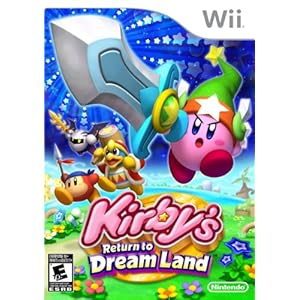
Kirby's Return to Dreamland


I don’t consider it a homecoming when I leave my apartment home to go downstairs and pick up the mail. I get no cause for celebration from returning to my humble abode after a grueling affair at the corner store. (Despite risking my life saying no to the kids asking me to buy them smokes.) Even traversing as far away as the distant land of downtown Toronto doesn’t quite warrant the fanfare Kirby seems to be getting with “Kirby’s Return to Dreamland.” I mean, Kirby didn’t really leave Dreamland in the first place. He took a jaunt to a land of strings and clothing patches, and even that trip led to Dreamland in the end anyways.

Writing this review is reaaaaaaaally making me want to play Kirby’s Epic Yarn again.

That game unintentionally challenged the notion of games being tests of wit and skill. You couldn’t die. There were no puzzles for which to test your intelligence and falling off a cliff merely penalized you with a frowny-faced Kirby. (Of which is a more guilt-ridden punishment than death itself.) No, that game’s success was in being so gosh-fucking-darned cute, and melodically-paced as to dispel all of life’s worries and put the player in a state of wholesome, drug-free bliss. If Kirby’s Epic Yarn was played in Arkham Asylum, crime in Gotham City would go down and the Riddler would be dispensing tongue twisters for all the kids. Instead of killing them with tongue twisters, I guess.

Kirby’s Return to Dreamland forgoes most of what made that former string-based lifeform of a game special and brings the puff-man back to his roots as a giant vacuum carnivore. We’re back to eating other life forms and snuffing their souls from existence in the name of absorbing their powers. But at least lessons were learned from Kirby’s …err…epic yarn of a tale. Namely that there is power in catharsis over difficulty. Sometimes, I don’t want a game where I get cornered by twenty armed guards speaking in Eastern European accents. Sometimes I just want to look at very cute things stab each other with spikes coming out of their adorable pores.

The main gameplay conceit of a typical Kirby game (one with carbon-based organisms instead of arts-and-crafts-based organisms) is that Kirby can suck up and spit out most enemy flesh. Or swallow and steal the potent superpowers from his adversaries. Part of the fun of those old-fashioned Kirby cannibalism games is discovering and experimenting with the various superpowers. All that is old is new again in Return to Dreamland, as each of the old powers have been given a handful of new tricks and toys for which to administer adorable assault.

Suddenly, every power becomes interesting. Old Kirby games had their share of “duds”. You know the ones I’m talking about. Electric Power. Spiky Power. The powers that involved you standing perfectly still and hoping Waddle Dee was Waddle Dumb enough to walk into you bioelectric field. (He usually was.) Well, here you can shake the remote to charge up and fire your electric field of doom. Or draw your spikes while dashing to transform into a rolling tire of spiky carnage, puncturing all in your path. This game is rated E for Everyone.

And then you climb the ladder from “Electric Kirby” and “Fire Kirby” to “Martial Arts Kirby” and “Indiana Kirby And the Temple of the Crystal Puff.” Constantly getting new powers, waylaying all that gets in your path, and being wooed by the cheerful background music. All the things Kirby does right, just now you can do it right with up to four people. Up to four co-habitants can hop in at any time and relieve themselves at the expense of poor Whispy Woods. (Of course you fight that, mopey giant tree again. Though you may be relieved to know he is the one major returning boss character. Sorry Kracko. Sorry…err…painter guy.)

Player 1 controls Kirby, and is the one for whom the screen and all in-level progress is centered around. So as long as player 1 is not a fool, the game will flow regardless of other players’ maturity/skill/grievance levels. The other players can control either different coloured Kirbys, (Kirbi?) Meta-Knight, King DeDeDe or a spear-toting Waddle Dee of Waddle Death. The latter three play like variations of Kirby with a spear, Kirby with a hammer and Kirby with a sword. Since they can’t absorb powers, I feel like playing as them is missing the point. (Unless the point is that you think a penguin in a king costume wielding an MF’in mallet is adorable, then by all means, rock that mallet.) So four players rocking four Kirbi seems to be to way to go. Also, worry not, this doesn’t have the horrible-human-being physics of New Super Mario Bros Wii. Characters don’t flubberishly bounce off each other and into bottomless pits, nor do they take every excuse to pick up and throw each other as if Mario and Luigi were magnetically attracted to spikes. No, here, four players can co-exist and co-operate peacefully. In fact, players can share health by way of embracing in hugs. It’s that kind of game.

And really, a Kirby game is all, all about the loving. In spite of all of my murderous wordplay, Kirby only wants to do is lend a hand. The plot of the game, or what little plot there is, involves Kirby helping a shipwrecked extra-terrestrial rebuild his ship because dagnabbit, Kirby is all about doing the right thing. Along the way, he’s going to dig up collectable items to unlock mini games and challenge rooms, including a surprise Super Scope reference, because Super Scope references are also the right thing to do.

Maybe the right thing to do is also to play Kirby’s Return to Dreamland. This is a game that figures out how to make that classic style of Kirbying fun to do. Then it gives you a chance to get three other people around to join you as a way of apologizing for making them play New Super Mario Bros Wii as a group. It has a certain charming aethestic and vibe that encourages you to kick back and turn puffy enemies into dust clouds. This is an ideal game to relax to, play in quick bursts between trips to the corner store and dramatic returns to your real life dreamland. And maybe get your younger siblings or drug-addled friends to join in with you. We’re all kind of sick of Wii Sports anyways.

4 stars

Monday, October 24, 2011

Batman: Arkham City


I wonder if the rest of the Justice League gathers around the Fortress of Solitude and gossips amongst themselves their envy towards Batman. Superman doesn’t get to appear in any award-winning video games. Wonder Woman wished that the rest of the world spoke in hush tones about anything she’s done the way the world does the Christopher Nolan Batman films. Green Lantern fantasizes about having an animated series that matches what cartoon Batmen has done over the years. I’m sure Martian Manhunter would love the attention of being in something as ironically revered as the Adam West series. Hell, in a parallel universe, Wolverine nudges up to Spiderman and says “hey bub, I wish Activision would stop dicking us over and make a real game like Batsy over there.” I guess talent is just drawn to the Dark Knight and his broody pecs. Maybe it’s because DC Comics learned hard lessons after the Batman and Robin movie nippled its way into existence. Maybe it’s just because Activision obtained the Marvel license just to spite the world.

2009’s Batman: Arkham Asylum was developed by people that clearly have a high opinion of Batman. They understand that Batman has no qualms being outnumbered 20 to 1, and that being left alone in a room filled with thugs armed with AK-47s is a horrifying experience for the armed thugs. Batman is a character so badass that only traumatizing childhood experiences can bring him to his knees, and even that requires hallucinogenic gases. That passion for vengeance, justice and gargoyle statues translates over to Batman: Arkham City, a game that ventures further into the psychopathic pathos that comes with breaking bones and collecting green trophies with question marks on them.

The titular Arkham City is a decrepit part of Gotham City transformed into a giant prison, I guess because economic times are rough and building new prisons isn’t a good use of Gotham’s tax dollars. (What with all that money being spent repairing all those buildings the Joker keeps destroying and all.) Being that the prison is operated by Hugo Strange, a man you know is evil based on his facial hair, something is amiss and Batman must deduce what. This game signifies that “Batman: Arkham Subtitle” is a new set of Batman fiction with a specific continuity separate from the comics and not a random schlep of trademarked characters slapped into a single game like every other comic-book game. The events of Arkham Asylum carry over here, and new events happen with a great amount of weight and impact.

How unfair it is; between the Nolan movies, the comics and now this series of games, that Batman fans have three different continuities to be excited about. The Justice League have every right to be jealous.

Rocksteady Games makes a note to expand on every element of Arkham Asylum that people loved. The combat is still based on timing button presses to strike and counter in a way that better resembles action movie scuffles than a video game melee fight. After all, Batman is too cool to do air combos. But subtle tweaks, like being able to counter several people at once, or do a bread-basket focused assault on a single foe’s solar-plexus makes things feel more dynamic. The game also makes sure to assign a bevy of shortcuts to quick-use all of Batman’s MANY gadgets. Want to quickly whip out some explosive gel to freak out enemies? You can. (Don’t worry, Batman isn’t fazed by such simple things as C4.) In a way, Arkham City is the Anti-Wii in that it not only uses every button on the controller, but in two-three different ways as to really confuse your brain’s wiring. Practice makes perfect, just look at Batman’s first year.

(Note: That Batman: Year One cartoon was okay I guess. The Red Hood one was better.)

That big, yellow utility belt also serves to make the stealth bits more satisfying. The core idea is unchanged; you perch on gargoyle statues and try to silently outwit armed goons and watch as they get progressively more terrified of you. The biggest innovation is that sometimes you aren’t perched on gargoyle statues! Sometimes they’re just metal structures placed around the facility akin to gargoyle statues! You also have new ways to play with your foes. Like a remote control that will sabotage a guard’s gun without them being awares. Or an electric blast that triggers one’s allergic reaction to high voltage.

If you focus on following the linear storyline, you’ll quickly realize that you are playing through Arkham Asylum. A more refined version of Arkham Asylum that seems to have more villains than they know what to do with, but still Arkham Asylum. (No, seriously. Two-Face seems to be shoved into the storyline for no reason other than to be another leader of hired goons.) The big difference comes when you’re allowed to explore the world at large. Arkham City is indeed a sizable mini-city, a city filled with hoodlums who don’t have much faith in their employers. No one ever says “boy, our boss the Joker sure is a swell pal. I’m glad I chose the life of crime.” There’s an awful lot of radio chatter from assorted goons that set a tone, though I sure do miss the Joker’s passive-aggressive, sometimes very aggressive death threats over the Asylum PA.

Within this city is a bevy of Riddler trophies and side-quests that will easily overwhelm a new player. The worst moment of playing Arkham City is the first hour, when your Batcomputer explodes with waypoints about sidequests, and a young, nubile new Batman player just doesn’t know what to do. It’s even more dangerous to your senses when you explore the city and realize that there are more Riddler trophies on the streets than litter. The new travel mechanics, which consist of Batclaw-rappelling and a more exciting variation on Super Mario World’s cape flight, make navigating around the city a pleasant and speedy experience at the least.

All of that side stuff is going to take an awful amount of time to do. Most of the side-quests relate to assorted Batman characters in an interesting way. Some of them just feel like decisive game-lengthening excuses to pad out the time it takes to reach the vaunted “100%” status. There are 440 Riddler tasks that one must do before you can confront the Riddler. As of this writing, I’m merely at 200. Many of them are tied to some kind of mini-puzzle contraption of sorts, so at least there’s a sense that some care went into the preceedings.

Still, it’s hard to not feel like corporate executives put some hard pressure on developers Rocksteady to make this game as resale-unfriendly as possible. The campaign is a decent 10-12 hours, but I feel that time can be more than doubled if one is crazy enough to venture for all of the side content. Then there’s the whole Catwoman ordeal. There are indeed segments of the game where you play as the walking fetish generator. Catwoman only plays slightly differently from Batman in that she has less toy gimmicks, but can climb walls like a spid…cat. But still, these segments factor into the main plot, and certain Riddler trophies can only be collected by Miss Kyle.

But alas, you won’t be able to play through those segments without an online pass. As someone that bought the game new, this didn’t affect me beyond the half hour it took to download all 320MB of Catwoman. But I never felt inclined to sell my copy of Arkham Asylum. That title was so damn exquisite that I was obligated to revisit it time and time again just to remind myself. This whole online pass business is a very gross reminder that men in suits want to make every dollar possible by any means necessary. What’s to stop the next Batman game from making you buy every thrown Batarang with real money?

Until that horrible day comes, we can at least take solace in knowing that Arkham City is an excellent title. I could have easily saved the hour it took to write this by saying “if you liked Arkham Asylum, you’ll like this”, as that is truly what it all boils down to. Still, there are two very telling feelings that preach to the quality of the game. One is my personal sense of obligation to go back and collect all of those vile Riddler trophies. The other is disgust knowing that my online rental service sent me Spiderman: Edge of Time, and that I should probably play that next. Wish me luck.

4 ½ stars

Saturday, October 15, 2011

Deus Ex: Human Revolution


Hey, check it, transhumanism! I think Deus Ex: Human Revolution is trying to be an ominous prophecy of the dangerous melding of flesh and machine. The thing is that I don’t know if that’s so much a future thing than a present thing. We’re already being augmented with laser eye surgery, replacement limbs, Taylor Lautner’s hair and other things that cannot be considered natural in any way, shape or form. Are mechanical 2-foot arms concealing 6-foot blades that much more unethical than Tiger Woods’ enhanced eyesight? We’re already uploading our music collections to the Cloud, is uploading our consciousness to Amazon that far removed? Bring on the mothatrucking Singularity, folks!

I have much adoration for Human Revolution in attempting to let players pick sides in the maybe-edgy issue of man and machine becoming one. But the problem with the game’s approach is that the main character is a half-man-half-machine-all-cop who stabs sentries with his humerus knives and conceals sunglasses behind his orbital bone. So the game is already innately inching players towards “augmentations are fucking badass!” The only rebuttal the game offers to that argument is that your character can only stab as many people as he has charged batteries in…wherever it is he places batteries. Also, he replenishes his battery power with chocolate bars. So if you’re anti-obesity, I guess you’re also anti-transhumanism.

Deus Ex stars Adam Jensen, a security guy for whom emergency augmentation surgery transforms him from generic brooding soldier to generic brooding soldier with Blades of Steel and a giant arrow above his head screaming “I have a shocking secret.” Until he figures out that secret secret, he’s going to help the augmentation company he works for figure out whom was behind the terrorist attack that cost him his boring human arms. I don’t think I’d call the plot itself especially interesting, and anyone that heard a thing or two about a thing or two about Deus Ex 1 already knows what the Big Reveal™ is.

But it’s the world itself that makes Human Revolution intriguing. This game’s version of the post-machine future is as weird as you’d think it is. Implants are fetishized, machine-based drugs are causing an addiction pandemic, augmented people are hated by the general population due to sheer envy of their awesomeness, corporations are more evil and sinister than ever, and I don’t think the sun exists anymore. It’s fascinating to explore the various settings, see the curious augmentation advertisements, hack into computers and learn the culture of each company. (Hint: people are either angry, scared, or pulling porn spam pranks that were comical in 1999.) You do learn very quickly, that no one in the future is capable of remembering passwords, and must rely on sending themselves and their coworkers e-mails and hoping that their rivals don’t have a Level 4 Hacking skill.

Very critical disclaimer: the Deus Ex franchise has never been kind to me. Deus Ex 1 is such a pure combination of action and RPG elements the likes of which I can never be made to comprehend. When I aim my handgun pointblank at someone’s temple, I feel cheated when a dice roll based on my firearms rating sides with temple. I’m so inept at bizarre stat-based action RPGs, I couldn’t even get into the dumbed down, baby’s first conspiracy thriller in that Deus Ex sequel. Human Revolution’s hardest difficulty setting is labeled as “Give Me Deus Ex”, and I shrieked! No! Please! Don’t give me too much Deus Ex. I’m Deus Ex Intolerant. I could cramp up real bad.

So I set the difficulty to the easiest given choice, “Give Me A Story.” I assumed that the game would dumb itself down enough that I could just breeze through the Deus Exey parts and admire Adam Jensen’s vicious arm blades. However, I quickly learned that I was misled. Cybernetic implants do little to keep my vitals free of enemy lead, it seems, and death is swift and frequent. Really, the one aspect of the game that was noticeably dumbed down was how the number of hack attempts given to break into any given machine would never diminish. So at the least, I felt comfortable that I could take all the time in the world breaking into a laptop and find all the penis augmentation spam ads I desired.

I also noticed that the game presented a more seamless and intelligent combination of those action and RPG elements that made me previously dread receiving more Deus Ex. When I aimed at someone’s head, I was kiiiiiiind of certain that one of those bullets would stay within my aiming reticle, in spite of any and all imaginary dice rolls. Your character isn’t leveling up a series of numbers that loosely resemble one’s ability to swim faster. You are making upgrade choices that have a practical and immediate impact on how you play.

For example, when you decide to purchase an upgrade that lets you punch through walls, suddenly all of these walls begin to glow, and new paths appear. Actually, I was so impressed with the might of my steel knuckles that I would smash through every wall smashable, regardless of relevance to my quest or guards with working eardrums. Most upgrade choices have a very real, practical impact on how the game is played. Suddenly, new paths open, stealth and/or gunplay become more plausible, and there are walls that have no business being left unpunched.

The game’s first few hours are among the most frustrating, if only because so many paths and options are blocked off on account of your lack of iron fists and poor stats. Every Praxis Point spent counts. A Praxis Point spent Practically makes you feel like a genius for running into a enemy gun turret that can be hacked or a wall that can be haymakered. (And I was giving many self-high-fives for that wall punch upgrade.) A Praxis Point spent impractically is aggravating. Avoid the “cone of vision” upgrade. Despite what you want to think, this game is not Metal Gear Solid; enemies have a field of vision wider than three feet ahead of them, and stealth requires a bit of thought and luck. Many of my early Praxis Point decisions were spent on trying to make my personal Adam Jenson not suck, in such areas as more inventory space or better hacking skills or such. By the end of the game, almost every area you want upgraded will be covered and you’ll have a mechanical jack of all trades.

Actually, the real worst moments are the boss fights, where you have to deal with superhumans with much more health and munitions than you unloading all of those health and munitions unto your iron pancreas. I had specked my character to be more firearms-friendly, on the easiest difficulty no less, and I was still finding myself cybermurdered repeatedly. I still had to do an awful lot of loading and saving every time I escaped 5 seconds of the boss fight with my head and sexy knuckles intact.

Endings are kind of dull, too.

Still, the biggest shock about Deus Ex: Human Revolution is that I actually found myself kind of half-liking it. There was a great deal of growing pains as I struggled to wrap my mind around the benefits of hacking computers or not murdering guards. But the game did manage to make all of its ideas click, by hook or by cybernetic crook. Not every person should play Human Revolution, but the person who wants nothing handed to them but the opportunity to make several unpleasant gameplay choices perhaps should.

3 ½ stars