Wednesday, September 19, 2012

Dust: An Elysian Tail


Dust almost feels like an unintentional call to arms. An Elysian Tail was developed primarily by one person with a lot of talent and a presumed love for the period of animated movies that Disney wants you to forget about. (The period of talking animals as protagonists and no princesses for which to be profiting off of at your local Disney Store.) Whether or not the source material connects with you is perhaps irrelevant when faced with the idea of this guy wanted to make his dream game, and then damn sure made that game. If this guy can almost single-handedly make a more refined action platformer than most of what’s on the market right now, what’s stopping any of us?

Right now, an installer for Unity sits on my desktop, mocking me, daring me to make something that doesn’t have zombies in it. One day...you'll see!

The dream game from developer One-Really-Talented-Man is a side-scrolling Devil May Cry-ish action game with loot, large worlds and female animal characters that have curves. Our protagonist has everything a person with a button nose can ask for; a sweet hat, convenient amnesia, a talking sword, an aviary female companion wearing nothing but the wide hips she was born with, and the ability to perform air combos for days without dirtying your feet with the ground soil. The story revolves around said hero using all of these assets for his leisure, to save the world from an evil general that seems to discriminate against anything that doesn’t have a cute button nose.

I wouldn’t say there’s anything profound about the narrative in Dust, other than that the production values are eerily slick. Watching a sword float back and forth in space, glowing as it presents calm, sage wisdom from its metallic memory allows one to quickly take for granted that this is a $15 game! There are voice actors that say lines. There is music that sounds like it could have been played on instruments. Characters alternate between advancing their serious plot forward and making a mockery of the fourth wall. There are actually animated cutscenes! I had a hard time making a game where still images of fruit teleports around the screen. The passion that One Developer Guy has for animated movies and Castlevania’s hiding of chicken within the walls is very much apparant.

Meanwhile, the action comes fast, furious and vision-obscuring once you take control of Dust. The combat in this game takes cues from Devil May Cry, The Dishwasher and anything else that is the opposite of realism. You attack enemies, knock them in the air, magnetically jump at them regardless of gravity’s opinion on their place in the air, and perform hundreds-of-hits combos. Then your semi-sexualized partner Fidget hurl spitball projectiles that can be transmogrified into flurries of explosions that are just as good at dazzling your sights as they are blocking your view of that lone goon’s next attack. So the skill part of Dust-fighting becomes a matter of knowing when to bob, weave and throw a wave of fiery Armageddon at those poor animal adversaries.

Meanwhile, you obtain loot, because every game must now have loot. (There’s also a level with zombies in them, so that checkbox gets reluctantly checked off too.) You don’t get to see Dust wear the loot; don’t be silly, he would never change out of that sweet hat. But you very much notice the effects of equipping different pieces of equipment. Your attacks get noticeably stronger, enemy attacks get noticeably softer, Fidget becomes more and more of a menace to society. Backtracking previous areas becomes a joy as you slaughter those early world enemies with relative ease, while accruing still relatively decent experience points. When you level up (because all games must also have an experience system) and invest a skill point in health, attack, defence or Fidget’s hips, you notice the improvement immediately.

And you become eager to test out your newly empowered creature as you go treasure hunting. Civilians in towns give you quests of varying degrees of absurdity. You get encouraged to explore every inch of the various, beautifully designed locales to open treasure chests containing gold, items and cameo appearances from assorted Xbox Live Arcade games. There are weird little hidden idiosyncrasies. One could be convinced that grinding towards the level cap is an obtainable and worthwhile goal. Even if you don’t reach the goal of making a virtual number bigger, you will collect plenty of supplies that you can transmogrify into loot at any given time by way of remote-control technology. Somehow this is a game that just gets so much right.

So hey, An Elysian Tail is worth overcoming any and all uncomfortable feelings you may have about animated animal characters and their relation to the subculture of furrie-sexuality. Hey, the female animal characters in Dust have human-like cleavage and curves. Some little kid is going to play Dust and develop a fetish for alternative mammals. Fetishism happens. Someone out there played Super Mario Bros and has an attraction to blondes with pink dresses and complete ditziness. The game’s vibrant style is unique in an industry riddled with generic war games and zombies games. (Even though there are zombies here too but, well, whatevs’.) Dust gets too much down right to be missed.

4 ½ stars

Sunday, May 27, 2012

Sonic the Hedgehog 4: Episode 2


I think at this point, there are three regions of thought in regards to Sonic nostalgia. There’ s the camp of people that just don’t think about Sonic the Hedgehog in their day-to-day lives; they are the great scientists, artists, leaders and free thinkers of the world. There are the people who actively curse Sega for ruining their childhood memories with images of interspecies relationships, bad camera angles and multiple anthropomorphic creatures not named Sonic in Sonic games. There might be a few scientists, artists, leaders and free thinkers in this group, I’m not entirely certain. And then there’s people like me, who are perfectly content. There was that Sonic Generations game from last year, and it was actually a well-rounded, very sound piece of Hedgehog self-celebration. One that allows me to glance at the Sega and think “okay, we’re cool, I forgive you guys a bit for Sonic Unleashed.”

Having Sonic Generations both exist and deserve to exist makes it weird for another Sonic 4 episode to co-exist. You know, a year and a half after Sonic 4: Episode 1 was released to a unanimously piss-poor response. Not the newly released Episode 2 is a lousy game; nooooo they’ve actually went ahead and pieced together something a bit more respectable.

Well, respectable if you’re already into the idea of a blue, big-eyed  creature that moves at an accelerated pace from the left side of the screen to the right. If you’re the kind of person that thought those silly Genesis games were pretty dumb, you should just click away from this page. Go be a good sport and buy Rayman Origins instead.

Many of the problems people had with the pilot episode of the Sonic 4 Comedy of Errors is largely corrected. Controls feel more res…well, more responsive for a Sonic game. Sonic still has a bit of his floaty, not-all-the-way agile leaping prowess that one associates with a Mario or a Meat Boy. (Yup, slab of meat is the leading mascot for a new generation.) But Sonic seems to be, for his own lowered standards, more capable of making specific jumps and picking up speed. Blasphemously enough, this version of Sonic doesn’t seem to run as fast as years past; age and arthritis had to catch up at some point. But while certain psychotic fans may cry foul, I at least found it to be a pleasant change in that I could now reasonably react to oncoming obstacles. The days of running really fast and losing all my rings from a cheaply-placed spike trap are gone.

The visuals feel more organic. Sonic, Tails and the all those woodland creatures transformed into adorable robot animals of death now feeling like living beings and not just sprites imposed on a background. The music feels like it would have come out of a Sega Genesis, minus the tinny audio quality of everything that came out of a Sega Genesis.

Also, Tails is back to being the indestructible-yet-helpless force that is largely helpless to whatever it is Sonic needs at that given moment. The only difference is that now wires spread across the nation allow that indestructible-yet-helpless force to be controlled by someone else over the internet. There are new double-team moves, such as a helicopter tactic for jumping, a submarine navigation attack for making the underwater sequences not suck for once in a Sonic game, and a dual-wheel spinning 69 move right out of an old SNL cartoon of certain notoriety. These new abilities add, well, they add something. Whether that something is enough to make this game feel unique is another matter.

Really, the biggest issue with Episode 2 is the same problem that seems to haunt every other Sonic game, in that there isn’t a whole lot to it. I finished the game’s 24 levels in about two and a half hours. This is a $15 dollar game.

So my problem becomes one of value. I can admire a short, pricy experience if I truly got something out of it. Limbo and Journey are clutch examples of games where the emotional resonance of the experience carries on well past their own limited play time.

No one is going to be mistaking this for a Journey or Limbo. Well, I’d like to think so, anyways. The closest thing Sonic 4 has for an emotional hook is 16-bit, blast-processed nostalgia. Nostalgia that has already been considerably mined, excavated and exploited by Sega.  And even if you are someone that still has a wealth of goodwill for this long-desecrated franchise, I can’t help but feel your money and time will be better spent on Sonic Generations or even revisiting those Genesis games. Alas, Episode 2 is an inefficient way to spend your time, but at least it isn’t a total waste. If you are desperate to part with your fifteen dollars, you won’t entirely hate yourself for doing so.

3 ½ stars

Saturday, May 26, 2012

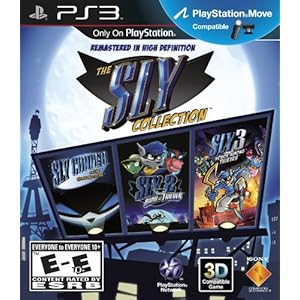
The Sly Collection


So these last few months have been a decidedly weird malaise for me. I feel like the medium of video games as a whole is failing to provide me with any kind of satisfaction. The big blockbuster disc releases are too mindless and unintelligent for my cerebral cortex, but the smaller arthouse games are too intelligent and complex for my mushy skull. I need some kind of middle ground. Intelligent murder games, maybe? Unintelligent adventure games? A new Kirby game? I don’t know. Thus, I’ve spent the last little while catching up on odd bits and pieces that have slipped past my notice from the years of intelligent murder games and unintelligent adventure games in my wake.

I never played a Sly Cooper game before on account if it being the bottom rung of Sony’s marketing strategy of “take what’s popular and make it three times over.” Realizing that a whole lot of people really liked Super Mario 64, armies of programmers were commanded to do-things-like-Mario-and-do-lots-of-them, leading to a trio of Jaks, a quartet of Ratchets and a flock of Slys. And I had collected too many coloured stars, eggs, lums, bolts, jingos and otherwise in other games to be particularly excited about yet another fetch quest platformer. But now that some time has passed and Sony has redirected its cloning efforts from recreating Mario to recreating Halo, this felt like the time to fill in the missing Easter Egg in my collection of Easter Egg Hunt action games.

The Sly Cooper franchise is built around a raccoon master thief, his Milhouse turtle friend and their opposite-of-Milhouse hippo brute friend. Except these games are rated E for Everyone, so these are thieves that only steal from bad people, of course. There’s somewhat of a connecting thread between all three games, sometimes involving Sly’s ancestry of master thieves, just enough that you may as well play through all three of these games in such a format as, perhaps, the Sly Cooper HD anthology for the Playstation 3 Entertainment Netflix Housing system. This HD set features such improvements as widescreen visuals, Playstation Move-supported shooting gallery mini-games, and Sly’s hat occasionally glitching out of existence in cutscenes.

Your tour of the history of mammal robbery begins with Sly Cooper and the Thievious Raccoonus. Here, you primarily play as Sly Cooper, a raccoon platform mascot pretending to be a master thief. Despite allusions to being a criminal from a dynasty of thieves, you never really do anything thief-worthy. Sometimes you’ll dodge lasers , sometimes you’ll dodge spotlights, thus meaning the game has as many stealth elements as The Wind Waker. No, this game is more Crash Bandicoot than Splinter Cell.

You mostly play through linear stages of platforming sequences. Sometimes you’ll whack enemies with your hook cane. Sometimes you’ll climb and shimmy objects. I stress the “sometimes” part; Sly, disgracing his raccoon genetics, often has a hard time gripping on to the climbable surfaces you intend him to. Even simple platform jumping can be tricky when you’re not sure what platforms are considered flat surfaces to Sly, and what platforms are too curved for his weak paws. Toronto’s many garbage-can-excavating raccoons would scurry circles around this Sly Cooper’s immobile ass.

You also deal with occasional mini-games, like a basic shooting gallery or a basic racing game, or basically throwing your controller to the ground because the checkpointing during boss fights is awful. Or basically giving up on the story, because the narrative exists solely to explain each of the game’s contrived scenarios. Why do you need to collect yet another pair of identical keys to open more identical locks? Are master thieves not master lockpickers?

Don’t mistake my above two paragraphs of ranting to think I despise Sly 1. It’s just that Sly 1 exists in a post-Meat Boy world, where a slab of flesh raised platforming standards with perfect controls, perfect checkpointing, perfect parodies of NES games and perfect fecal humour. Times have changed since people thought watching DVDs on Playstation Twos was revolutionary tech, and Thievieus Raccoonus has aged the worst of the games in this set. At the least, playing through Sly 1 will give you a fond admiration for the games to come in this HD set.

Sly 2: Band of Thieves is the first Sly Cooper game that establishes what a Sly Cooper game should be. Gone are the linear platforming sequences, in favour of a series of missions within various colourful overworlds. There are a myriad of mini-games too, and the quality of mini-games is solid enough to keep things feeling fresh. Imagine Grand Theft Auto without the autos, the mass murder, and in favour of more Grand Theft. Besides being better in tune with his rodent roots in regards to climbing, jumping and other platforming, Sly has the added, series-defining ability to pick pickets. Slink behind an enemy, and press Triangle to use your cane to empty their oversized coiffeurs. It’s a simple, easy and satisfying mechanic that leads to me being distracted from any given mission because I see the warming glow of a golden watch sticking out of some security guard’s pocket.

There is more confidence in the game’s own cartoonish narrative. The game is comfortable with making its villains the most absolute of ridiculous stereotypes.  Be it a lizard with Andy Warhol-like qualities or a Northern moose that made me come to the horrible realization of what a “Canadian accent” is, the game is delightful in its insensitivity. Most importantly, Sly 2 succeeds at putting the player through the paces of a criminal mastermind, or at least an E for Everyone-criminal mastermind. Each mission is positioned as a thread in a greater scheme, setting Sly and his crew in the direction of an all-too-elaborate Ocean’s Eleven-style heist.

It’s not an entirely perfect experience; the game handles waypointing by making a giant blue/green/purple arrow near your next objective; an arrow that isn’t visible if your character is surrounded by towering skyscrapers. And to an anthropomorphic rodent, two-storey houses are considered skyscrapers. Also, you’re not only playing as Sly. Sometimes you have to play as cowardly turtle-genius Bentley or pro wrestling mark of marks Murray. Their missions tend to be amusing mini-games, but the process of getting to said missions can be tricky for animals that can’t scurry or climb the way blue raccoons are capable of.

Small sacrifices that one makes in the name of an entertaining criminal platformerish experience, a fun way to spend 14 hours of your life. Not to mention an ideal set-up for Sly 3: Honor Among Thieves.

Sly 3 is the wiser, smarter, maturely-more-immature version of Sly 2. The structure and concept of going into an overworld and performing a myriad of conniving sub-missions is the same. There are some wise tweaks; waypoints are easier to find thanks to the incorporation of sonar hearing in Sly’s genetics. Traversal upgrades are made available sooner as to make getting through the land as either Sly, Bentley or Murray less menial of a task.

Most importantly, Bentley and Murray are now also capable of pickpocketing.

The Ocean’s Eleven vibe of performing mini-tasks in service of a master heist has been slightly compromised. Instead, the game’s plot involves Sly’s crew attempting to recruit good guys by way of doing bad things to bad people. But even with that in mind, the writing in Sly 3 is the very best. The game is rich in sharp dialogue and humour that doesn’t just pander to the youngest possible audience.

I guess you could buy these games a la carte on the PSN store, and I can sit here and say that just buying Sly 3 by itself isn’t the worst idea in the world if you’re strapped for time. But hey; I paid thirty dollars for little over thirty hours of entertainment from this package and came away very satisfied. Ergo, I consider this a strong purchase for people craving a charming, pocket-lightening value proposition.

4 stars

Friday, May 25, 2012

Skullgirls


I found the target audience for Skullgirls in a basement facility near a video game shoppe in downtown Toronto. This gentlemen’s club was sort of a modern day arcade, where tournament-caliber fighting game fans can ply their craft at the expense of people who wanted to be tournament-caliber fighting game fans. One guy asked me to do repeated Sub Zero low kicks so he could decide which Kitana attacks were best suited for countering said low kicks. You know, that kind of crowd. Well Skullgirls was the new hot dame at the club and people were smothering the various monitors of this facility, attempting to learn what attacks chained into what, what cancelled where and how to get away with the longest combos without the game’s “infinite breaker” telling them to stop.

Many of my attempts to challenge these eager students resulted in extended periods of me sitting down, palms on cheekbone, waiting for Miss Valentine’s combos to end on my once promiscuous female combatant of choice. The practice and determination of these enthusiasts had certainly paid off. Granted, I turned the tables when I had asked to throw down in the less combo-friendly Street Fighter Two, and these combination fiends were helpless against such tools as “fire ball” and “pile driver.” But alas. If those gamers converted their Skullgirls skills into boxing skills, they would have no hope against Floyd Mayweather’s unexciting counterpunch strategy, but that’s neither here or there.

But the point is that Skullgirls is a fighting game for people that mechanically love fighting games. Well, I think it is, anyways. I know for sure that it’s a fighting game for people that dream of being people that mechanically love fighting games. To get the most out of your Skullgirls experience, you must be the kind of person that has the willpower to study frames of animation, damage properties, stunlocks, roman cancels, roman catholic cancels and other fighting game terminology that enters my left ear and flies out the right. 

If you are not that person, then don’t listen to the lies that you may have heard about Skullgirls having in-depth tutorial designed to teach you how to properly play a fighting game. It has a lengthy tutorial, alright. And said tutorial does use some flowery fighting game language. But it seems the game arrives with about half of the material that the developers would have intended. The technical bits that make a fighting game a fighting game are explained, but none of the psychology of how to win, how to use certain characters, how combinations of characters match up against others. They don’t even give you the movelists! My first hour of play was spent with Cerebella, a girl with giant arms sticking out of her hat. I never clued into the idea that she had some 5-6 throwing attacks, and that she was meant to be a Zangief-styled throwing character. Maybe it was the lack of chest hair that kept me from making the connection.

Or maybe the developers intended all along for players to do all the research themselves. Treat Skullgirls like a 90s arcade game, where fools easily parted with their quarters spent their money, toying with various button presses because a friend told them the secret to playable Kano and Sonya in Mortal Kombat 2. 

Regardless, Skullgirls definitely works within its singular focus. The 8 character roster seems small, but each character is so vastly different from the one before it, demanding (I think) completely different play styles and strategies. You can elect to play either with one strong fighter, two not-so-strong fighters or three pantywaists with full Marvel vs. Capcom-styled tag abilities, and that seems to be the approach to success. Further encouraging freeform combo self-expression, you can even choose any single attack or special move as an assist attack.

And you’ll want to express yourself against other live players. The online netcode uses GGPO, which does complicated math-things that I don’t understand to make matches feel lag-free. Match-making is also usually a quick procedure. Or at least it is quick to pair me against players much, much better than me, eager to get me better acquainted with their fists in sets of 20-30. 

To be frank, either, playing online, locally against other humans, or practicing your favourite air juggles for use against other humans is really the only way to play Skullgirls. There’s an arcade mode, but saying Skullgirls technically has an arcade mode is like saying a porti-potty technically has a toilet. You fight people, often the same people repeatedly because the roster is small, you waltz your way to the credits screen. There’s a story mode that puts dialogue and pictures of the girls getting touched in places in between the fights, but not much of note is worth experiencing.
This is definitely a game that I wanted to appreciate more. The art is nothing if not provocative, contrasting overty-sexualized female characters with some more grotesque anomalies and several dozen video game references. The music is kind of catchy in a way I want to listen to in my every day life... just not within the context of a fighting game. Think a less unintentionally ironic rendition of Marvel vs. Capcom 2, not wanting to be taken for a ride but maybe more a casual stroll down the Harbourfront.

But Skullgirls is a picky lass, only wanting to be admired by those willing to obsess over its every minute detail. The foods it likes, the jewelry it makes you buy, the stunlock properties of its low-cut top. Devoted fighting game enthusiasts who enjoy doing their video game homework will be supportive and put up with Skullgirls’ bitchy attitude and desire to be driven everywhere. Me, I prefer something a little more level-headed, so I’m going back to my long term relationship with Street Fighter 2.

3 stars

Thursday, March 15, 2012

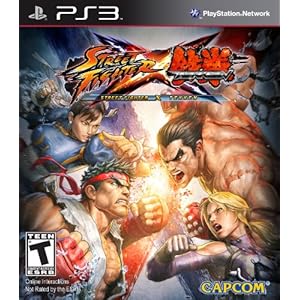
Street Fighter X Tekken


I lied. I said a few months back that I wouldn’t be purchasing Street Fighter X Tekken on account of learning a valuable lesson on how Capcom does business. I was the fool that purchased the Limited Edition of Ordinary Marvel vs. Capcom 3, guffawed at the homogenous collector’s comic that was loosely attached to the tin case, then sold said case immediately because Ultimate Less-Ordinary Marvel vs. Capcom 3 happened. I had vowed then and there to never buy a first generation Capcom game again, after realizing Capcom games were now going to have multiple generations. But alas, the promises of rampant casual racism and Zangief piledriving a bear were too much, and Twisted Metal’s online service is still non-functional after some four patches. So let us get to piledriving wildlife.

Capcom did at least have enough disrespect to make me pay in other ways for my all-too-eager purchase. They made me wait one week before unlocking bonus characters Pac-Man-in-a-mech-suit and up-yours-Inafune-here’s-fat-MegaMan. Then they penalized me for waiting the week by making both of those characters grossly underwhelming to use in comparison to actual Street Fighting and Tekkening characters. Then they decided to remind us that playing these fighters online must always be an imperfect experience by having the sound effects all but vanish in online matches. It’s a weird glitch; the audio effects randomly not playing, not getting the gratification of hearing fist hit flesh and your favourite fighting game character yell out the name of his trademark attack. But hey, this fault is easily corrected by muting the game and turning up your podcast/Sammy Hagar album of choice, and coming off of Twisted Metal’s “wait five minutes to find out you couldn’t join the game”, having online play be almost functional is kind of a godsend.

I guess pitting Street Fighter characters against Tekken characters makes sense. We’ve already gotten the SNK/Capcom crossover a couple hundred people dreamed about a decade ago and we’re not getting Street Fighter X Mortal Kombat on account of that violence, and we’re not getting Street Fighter X UFC because no Street Fighter character has an answer to Georges St. Pierre’s double-leg takedown. So this is the next best thing and they kind of make it work. The things that I associate with Street Fighterish combat (throwing fireballs, jumping high, special attacks involving more crazier fireballs) are here, combined with the things that I think are associated with Tekken (long, long combos and a bear.) The result is a game that plays fast and involves punches in bunches of bunches. So many hits transition into other hits that launch your opponent in the air that lead into other hits, and you can usually guess what moves flow into what and actually be sort of correct. The end result is a game that floats just barely above button-mashing in that way that made so many non-fighting game fans think Tekken 3 was the bomb and everything after, well, less so the bomb.

Granted, there are still plenty of nuances for people that actually care about fighting games to pick up on and defeat the people that thought Tekken 3 was the bomb. One look at the very slow and annoying tutorial will reveal all kinds of confusingly-named systems in place. There’s the Cross Assault, the Cross Counter, the Cross Combo, the Cross Calamity, the Cross Eyes, the Crossed legs, the Sign of the Cross, the Criss Cross attack that makes the enemy jump and jump. There’s also all of that byzantine gem business, where you would be theoretically able to equip stat buffs that come into play after certain conditions are met. I feel that there might be something substantial to this whole gem business, like maybe I could come up with certain combinations that fit the way I play. The problem is that I have to go to a separate menu to equip these gem combinations on a per-character basis.

You know, in a game with about 40 characters. All of which are equipped with only 2 out of a possible 3 gems by default. That’s an awful lot of micromanagement that I can’t be arsed to get involved with. So I don’t. So I just kick back and fiddle around with the 40 characters at my own pace. And well, the characters are by and large kind of great. Well, I think so anyways, I can’t be made to play more Tekken 6 to find out if they’re really true to form. (Hey, does anyone in the Toronto area want my copy of Tekken 6?) The Tekken characters don’t feel like someone mapped Street Fighter-like moves to them against their will, as they’ll try to survive on their own with no need for smaltzy fireballs. And all of this action takes place in a two-on-two format with teammates randomly subbing out to complete each other’s combos; a very bro-ey maneuver, and your partners are presumably such tight buddies that the depleted health bar of one teammate will cause the other to instantaneously throw in the towel.

Like an actual Tekken game, Street Fighter X Tekken has more narrative than you can possibly care about. Even if the means to access the story are poorly communicated; you have to play as certain pairs of fighters, and the pairs are positioned next to each other on the character select screen in a manner that would only make sense once someone outside of the game tells you such. Once you do clue in, you get involved in a meaningless plot involving history’s first macguffan, Pandora’s Box causing people to fight each other. There is post-fight dialogue, there are some story bits, including a full-blown CG cutscene ending where nothing of note ever actually happens. I would recommend people play Arcade Mode and see what comes of Zangief and Rufus, but otherwise Arcade Mode exists largely to give your thumbs some buttons to press while Capcom servers look for an online match.

I want to say that Street Fighter X Tekken will appeal to the hardcore fighting game community and be a favourite of tournament players, but I don’t know. They were too busy ripping into my ethnicity, and the ethnicity of those around them. But as someone who plays fighters for the same reason I play other games, watch movies and cheer on fighting hobos, this game amuses me properly. There’s a goofy little mode called Scramble mode, where all four characters are on screen hurting each other, and it’s complete, untactical madness. There’s some kind of party mode potential there, and even beyond that, Street Fighter X Tekken is an ideal goof-around fighter.

4 stars

Tuesday, December 6, 2011

Ultimate Marvel vs. Capcom 3


After you bypass all of the data installations, trophy installations and even the prompt to check if there’s new downloadable content for you to give Capcom more of your money, the first sight one witnesses after booting Ultimate Marvel vs. Capcom 3 is saliva. The introduction is a scrolling through the pages of the comic book that came with the special edition of Marvel vs. Capcom 3. You know, one of the once exclusive features that came with the $70 package that subsequently became obsolete when Ultimate Marvel vs. Capcom 3 came into existence. Thanks guys, I really appreciate the lesson learned. I know now never to buy a first-run Capcom game. Street Fighter X Tekken? I can wait nine months for the ultimate super edition.

As for the actual disc release of Ultimate Marvel vs. Capcom 3, it is a n objectively improved version of Marvel vs. Capcom 3. There are still three jacked up cartoon characters fighting three other jacked up cartoon characters in a test of might and high-jumping prowess. You are still filling a super meter that allows you to urinate Dragonball Z-style lasers out of your urethra. The training mission mode is still a bust that doesn’t even teach you how to properly execute the combos they ask you to perform, let alone actual fighting strategies needed to compete with the vicious online community. The big difference is that half the populace isn’t abusing Wesker anymore. No, they moved on to the modestly-less campy Virgil.

There are twelve new player characters. The only returning character from years past is Strider Hiryu, a ninja from a franchise I’m sure Capcom would love to revive, release and then release a special edition of. There’s something decidedly bold regarding their decision to ignore the cries of the people to bring back assorted older characters. Especially since most of those cries came from me. But alas. No Ken, no Gambit, no Venom, no cactus person.

There are a couple of populous favorites amongst the new cast. Ghost Rider is here as Ghost Rider and not Nick Cage. Hawkeye is here as Hawkeye and not Jeremy Renner. The Nemesis is here not as Nemesis but as trenchcoat-flasher Nemesis. But then the game hucks at you a few surprise curveballs. Frank West learns new attacks by way of leveling up with photography. Phoenix Wright enters the annals of all time great fighting game characters by collecting evidence and a level three super that immediately declares his opponent guilty. They even threw in Rocket Raccoon for no better reason other than to inspire people to look at his Wikipedia page and repeatedly yell “oh shit” over and over again. They sure didn’t put him in the game because he would make an interesting fighting game character.

I found myself at least drawn to most of the new cast. If you do the math, you are paying about 1.666666 dollars less per new character than you were charged for them in Mortal Kombat or Street Fighter 4 Arcade Edition. I don’t know what the tournament scene thinks of this addition; Virgil aside, people are still standing by the Sentinels, Dantes and Phoenixes (not Wright) of the world in regards to people whooping my ass online.

From there, I can count the number of meaningful additions on one hand, and meaningless additions on the same hand. X-Factor no longer speeds up your character and creates a Sentinel with lightning-fast mutant-killing efficiency. It still heals you and strengthens attacks, so my strategy of “let the first two characters die so Captain America can do all the dirty work” still applies. And the online matchmaking has gone from “not working” to “working”. You can now go to “player match” and “ranked match” and actually sometimes find someone. Also, lobbies and spectator modes are now a thing, bringing Marvel vs Capcom 3 up to par with the rest of the fighting game world. Less meaningful is a mode to play as final boss Galactus, so you too can realize why he was never meant to be anything beyond an AI-controlled boss character with basic attack patterns. And I was told there are new background stages, but I barely noticed. They seem more like slightly-modified versions of existing stages. Alas.

I’m going to play a lot of Ultimate Marvel vs. Capcom 3 on account of how strong the original game was, and this happening to be a stronger version of that. However, I can acknowledge that only three groups of players should buy this game. Either you love Marvel vs. Capcom 3 a lot, or you never bought the first game and have now developed a curiosity for punching a Sentinel with Phoenix Wright’s legal papers. Or, you had the clairvoyance to not buy the original game in anticipation for this special edition. In any event, I know that this game is good enough to last me beyond Street Fighter X Tekken’s release and up to whenever that game’s special edition comes out.

3 ½ stars

Monday, December 5, 2011

Saint's Row the Third


Not to get my melodrama on, but there’s a problem with seriousness. So many games try their damnedest to play the straightest of laces with material that isn’t especially well worth the investment in dignity. It’s hard to get particularly invested in a major war game where the solution to Russia’s invasion of the American heartland is to detonate a nuclear bomb in space. Or about the secret cult of Italian assassins as depicted through the genetic memory of a clueless bartender. How about that green elven ninja rescuing a princess from a talking pig monster? Yup, please take us seriously pretty please we are grown-ups too!

I always felt betrayed by the Saint’s Row games. For all their talk about being the silly, lap-slapping joyride that the Grand Theft Auto series were all too mature to up, all of that glee was evaporated the moment plot needed advancing. There were some appallingly dramatic moments in Saint’s Row 2, moments that were too poorly written to earn any kind of emotional impact. It’s hard to mourn for the loss of a gang member when sitting next to a comrade-in-arms named Johnny Gat. Also, the comedic moments felt like they were spawned out of a sense of teenage rebellion designed to spite Grand Theft Auto’s sudden grounding in reality. The response to GTA 4’s humbled story of poor Niko Bellic was to drive around downtown in a sewage truck spraying anal produce. Little immature, yes, but at least more adult than most of the online players shooting you on the Halo servers.

So Saint’s Row the Third works by virtue of largely abandoning any pretenses of drama. Actually, there are moments of drama here and there, but they tend to exist to highlight a subversive joke. Like how the underdog high-flying luchador is voiced by Hulk Hogan. The game spends less time trying to engage you in a dramatic story or remind you of how snobby a certain other crime franchise has become, and more time establishing it’s own dumb, dumb identity. One of the earlier missions has the player leaping and skydiving from one plane to another, gunning down enemies who are too busy shooting at you to notice they’re free-falling to their imminent deaths.

In fact, most missions have some kind of “I can’t believe they’re doing that” moment in them. The subsequent issue that I face is that the more I describe what happens within the main storyline, the more juicy moments of ridiculousness I ruin for the player to discover. Just trust me when I say that shits will hit the fans in manners most appropriate and inappropriate.

You do get to revel in the inexplicable nature of the world. You are once again the leader of the Third Street Saints, who are popular enough to have their own energy drink (amongst other dumb memorabilia.) Your said protagonist is also your own creation, be it male, female, zombie-voiced, emerald-coated skin or otherwise. Your said character can still achieve plastic surgery and change genders or facial features as casually as one changes bed sheets. Your character also just happens to have infinite parachutes for casual skydiving, a willingness to surf on cars and a phonebook filled with gangstas waiting to chill with you and get work their energy drink promotion on.

There’s no attempt to disguise this game as anything but a total male power fantasy. Rather, it aims to be the campiest male power fantasy possible. Your cribs will come to have casual pole-dancers and your choice of customizable gangsters (early options include a gang of strippers and ninjas.) Soon, you get the ability to generate assorted unlocked vehicles at your behest, be them cars, trucks, tanks, copters, jets and things more illogical than those. You can purchase upgrades that range from ragdoll-fueled exploding bullets to straight-up being immune to damage. Yep. The highest plausible unlocks in the game are akin to god mode.

It’s all fueled by a gameplay system that feels about as loose and flexible as the game’s ladies. The gunplay is still based on dual-joystick third person shooting that was once cutting-edge in, say, the original Tomb Raider. But by virtue of not changing with the times, Saint’s Row comes across as more fast and frantic in contrast to the more controlled and sluggish pace of modern cover-based shooters. Vehicles also have very quick and forgiving controls, designed less to simulate driving a giant piece of scrap metal than a mobile lawnmower of pedestrians. All of this is punctuated by a run button that, when held down, adds accelerated abilities to your standard attacks. Amongst then include casually dropkicking civilians or the game’s greatest innovation, the ability to torpedo yourself instantly to the driver’s seat of any vehicle.

This is also a game littered with all of the side-quests and collectibles you imagine a sandbox game to contain. There are assassinations, vehicle thefts, copter flights, hooker-rescuing and other tasks. Many of them involve taking territory from rival gangs of luchadores, emo hackers and Swiss seductresses, and these plot threads have the natural (i.e. ridiculous) story conclusions you expect them to. The sidequests are largely a mixed bag of quality; they’re at their best when they involve wanton destruction in, say, a tank. They’re at their worst when they involve some kind of escorting in which the target you are escorting are vulnerable to being caught in your flurry of missiles. Still, I was compelled enough to complete most of the side missions.

The only thing keeping me from 100%ing the game is that a glitch of some kind is preventing me from finishing one of the assassinations. I’m supposed to bug a rival pimp’s effeminate employees, but by virtue of taking over all territory in the area, there are no rival concubines for which to pester. The game has other technical faults, but they’re loony enough to enhance the experience more than harm. I did not find anything particularly odd about, say, a semi sticking vertically out of the ground. Nope. Not at all.

Finally, there are multiplayer options. The more attractive of which is the ability to just straight-up jump into a friend’s single player game and help a broski in need. Why are there two people claiming to be leader of the Saints? Not the most concerning thing going on in that game. There’s a Horde Mode imitation, called Whored Mode (laugh please) that throws in random gimmicks to each round ranging from “shoot everyone who is now 9 feet tall” to “beat everyone to death with your blow-up doll” but alas, the novelty is limited and you can’t use your campaign character in it.

Alas, the allure of Saint’s Row the Third is twofold. Part of it is just witnessing the lunacy and spectacle of the game’s events. The other is that the gameplay meets its own ridiculousness and provides a quick, exciting sandbox game to boot. This game embraces its sandbox roots whole hog and gives you the best set of options for razing the citizens and pestering the cops. Remember how much fun getting the elusive 5-star wanted level in Grand Theft Auto 3 was? Saint’s Row the Third matches that, and does it wearing a luchadore mask.

4 ½ stars